
 By rafiqbd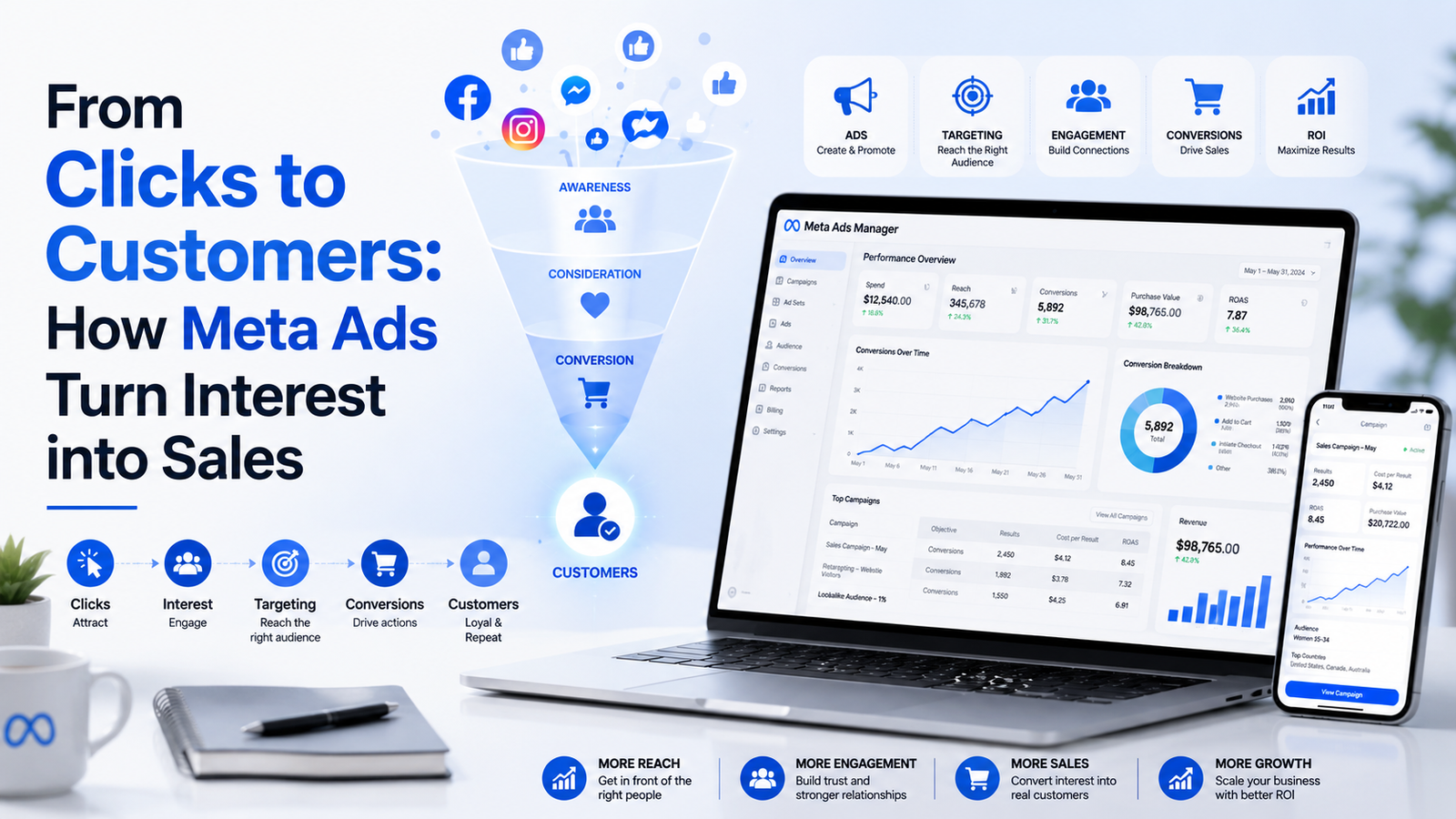
Many businesses spend money on Facebook and Instagram ads but feel disappointed when the results do not match their expectations. They may get likes, views, comments, or website visits, but very few actual sales or qualified leads. This usually happens because the campaign is focused only on attention, not conversion.
Meta Ads can be a powerful growth tool when used with the right strategy. A good campaign does more than bring traffic. It guides people from first interest to final action. Whether your goal is to sell products, collect leads, get messages, or promote a service, Meta Ads can help move potential customers step by step through the buying journey.
Clicks Are Only the Beginning
A click shows interest, but it does not always mean a customer is ready to buy. Some people click because they are curious. Some want to compare prices. Some may visit your page today and return later. That is why businesses should not judge ad success by clicks alone.
A smart Meta Ads strategy looks beyond simple engagement. It asks important questions: Are the right people clicking? Are they taking action after clicking? Are they sending messages, filling out forms, adding products to cart, or making purchases?
When your campaign is built around customer action, every click becomes more meaningful.
Meta Ads Help You Reach People with Real Interest
Meta Ads allow businesses to reach people across Facebook, Instagram, Messenger, and WhatsApp, helping brands connect with users where they already spend time online.
This matters because customers rarely buy from a business they have never seen before. First, they need to notice the brand. Then they need to understand the offer. After that, they need enough trust to take action.
For example, a small clothing brand can show new arrivals to people interested in fashion. A restaurant can promote offers to people nearby. A digital service provider can reach business owners who may need marketing support. With the right audience setup, ads are shown to people who are more likely to care about the offer.
The Right Campaign Objective Makes a Big Difference
One common mistake businesses make is choosing the wrong campaign objective. If the goal is sales, the campaign should be planned for sales. If the goal is leads, the campaign should be built for lead generation. If the goal is messages, the campaign should encourage people to start a conversation.
Meta explains that campaign objectives should match the business goal of the ad. This is important because the objective tells the ad system what kind of result you want.
A campaign made only for engagement may bring likes and comments, but it may not bring serious buyers. A campaign made for conversions or leads is more focused on business results. This is why strategy matters before spending money.
Good Ad Creative Turns Attention into Action
People scroll quickly on social media. Your ad has only a few seconds to stop them. That is why visuals, headlines, and copywriting are very important.
A strong ad should clearly show what you offer, why it matters, and what the customer should do next. The message should be simple, direct, and benefit-focused. Instead of only saying “Buy Now,” your ad should explain why the product or service is useful.
For example:
“Get more quality leads for your business with targeted Facebook and Instagram ads.”
This type of message speaks directly to the customer’s problem and presents a clear solution.
Meta also offers Advantage+ creative tools that use AI to help optimize ad variations and improve how images and videos are shown to audiences. But even with automation, businesses still need a strong offer, clear message, and professional creative direction.
Landing Pages and Messages Complete the Journey
Getting someone to click is only half of the process. What happens after the click is just as important.
If a person clicks your ad and lands on a slow, confusing, or poorly written page, they may leave immediately. If they message your page and receive a late or unclear response, they may lose interest. That means the ad worked, but the customer journey failed.
To turn clicks into customers, your website, landing page, or inbox response must support the ad. The offer should be clear. The call to action should be easy to follow. Contact information should be visible. The customer should not feel confused about the next step.
A smooth experience after the click can greatly improve your results.
Retargeting Brings Interested People Back
Most customers do not buy the first time they see an ad. They may visit your website, check your service, watch your video, or message your page without making an immediate decision.
Retargeting helps you reconnect with these people. Meta describes retargeting as a way to reach audiences who already know your business and encourage further engagement through personalized ads.
This is powerful because warm audiences usually have more buying potential than completely new audiences. They have already shown interest. They may only need a reminder, a better explanation, a testimonial, or a special offer to take the next step.
For example, a person who viewed your service page but did not contact you can later see an ad that says:
“Still thinking about growing your business with Meta Ads? Let’s build a campaign that brings real customers.”
This kind of follow-up can turn missed opportunities into real conversions.
Tracking Helps You Understand What Works
Without tracking, advertising becomes guesswork. You may know how much money you spent, but you may not know which ad brought leads, sales, or messages.
Meta Pixel helps businesses track website activity, build audiences, and optimize campaigns. This makes it easier to understand what happens after someone clicks an ad.
Tracking helps answer important questions:
Which ad is bringing the best results?
Which audience is most interested?
Which campaign is wasting money?
Which product or service gets the most attention?
With this information, businesses can improve campaigns instead of repeating the same mistakes.
Meta Ads Work Best with Continuous Optimization
A successful campaign is not created once and then ignored. It needs testing, monitoring, and improvement.
Different audiences may respond to different messages. One image may perform better than another. One headline may bring cheaper leads. One offer may convert better than a general promotion.
Smart advertisers test different creatives, audiences, placements, and calls to action. They remove weak ads and scale the ads that perform well. This process helps reduce wasted budget and increase the chance of better results.